Lampshade materials compared: paper, linen, raffia, jute, cement and glass
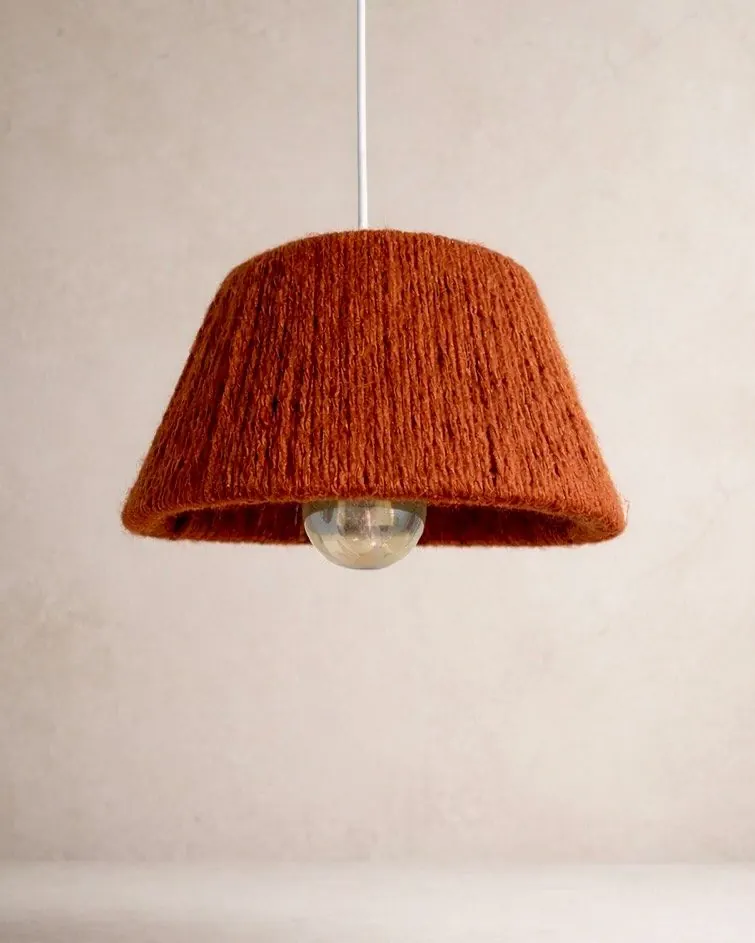
Two lamps with the same bulb can light a room completely differently, and the reason is the shade. Paper glows, linen softens, raffia dapples, cement blocks and glass sparkles. Here is how the common lampshade materials behave, what each is good for, and how to choose between them, from a studio in Yerevan that works mostly in paper, fibre and cement.
The one question to ask first
Do you want the shade to glow, or to direct the light? A translucent shade (paper, linen, thin fabric) becomes the light source itself: soft, even, no glare, less light on the table below. An opaque shade (cement, metal, dense ceramic) hides the bulb and throws all the light up or down in a crisp cone. Open weaves (raffia, jute, thread) sit between the two and add pattern. Decide that, and half the materials rule themselves out.
Papier-mache and paper
Layered paper is the warmest glow of all: the whole shade lights up in a soft, slightly uneven way that flatters faces and rooms. It is very light, so even a large pendant hangs from a simple hook, and it can be shaped into forms no fabric frame allows. Its limits are water and steam, which is why paper belongs in living rooms, bedrooms and dining rooms rather than bathrooms, and it needs an LED bulb so it stays cool. Our guide to making papier-mache explains the material; the bulb guide covers safety.
Linen and cotton
Fabric shades diffuse light evenly and look right in almost any interior. Linen has a visible weave and a natural, slightly irregular surface that suits Japandi and wabi-sabi rooms; cotton is smoother and more neutral. Pale fabric glows, dark fabric blocks light and throws it down, so a black linen drum over a dining table gives a pool of light on the table and a shadowy room around it. Fabric is easy to dust and tolerates a little humidity better than paper.
Raffia, jute and natural fibre
Woven and wrapped fibres let light escape through the gaps as well as the opening, so a raffia or jute pendant throws a pattern of light and shadow across the ceiling and walls. Lit, it reads as a lantern; unlit, as texture. These shades are light, warm in colour even with a neutral bulb, and forgiving of imperfections. They suit kitchens, terraces, dining rooms and anywhere you want atmosphere rather than reading light. Our raffia, jute and linen guide compares the fibres in detail.
Cement and concrete
Cement is opaque, heavy and cool, which makes it the opposite of paper. A cement shade or lamp body hides the bulb completely and gives a sharp beam, so it is a material for task light, directional pendants and table lamps where the bulb itself is the glow. Its weight and mineral surface ground a room, and it tolerates bathrooms and covered balconies, with a quick wipe for spills. Our comparison of papier-mache and cement goes deeper, and the cement lamp guide shows how one is cast.
Glass and metal
Clear glass shows the bulb, so it works only with a decorative filament bulb and gives sparkle plus glare in equal measure. Opal or frosted glass diffuses well and is easy to clean, which is why it dominates bathrooms and kitchens, but it adds no texture. Metal is opaque and directional like cement, lighter and often shiny; brass and black steel are the classic dining-pendant materials. Both are factory materials at heart, and both can look cold next to paper, fibre and wood.
Side by side
- Softest glow: papier-mache, then pale linen.
- Most light on the table: cement, metal, dark fabric.
- Most atmosphere: raffia, jute and thread, for their shadow patterns.
- Lightest to hang: paper and fibre; heaviest: cement and glass.
- Bathroom and steam: glass, cement, metal; never paper.
- Warm with any bulb: raffia, jute, terracotta-coloured paper.
- Easiest to clean: glass, metal, cement; paper and fibre want a dry brush.
Whatever the material, use a warm LED bulb and match the Kelvin across the room; our colour temperature guide has the numbers.
Pieces in each material
Everything below is made by hand in Yerevan, to order; most can be made in another colour or size.
- Papier-mache Pendant Shade — 15 × 33 cm — 14,000 AMD
- Linen Pendant Lamp — 18 × 24 cm — 14,000 AMD
- Raffia Pendant Light — 17 × 35 cm — 15,000 AMD
- Braided Jute Pendant — 50 × 24 cm — 10,000 AMD
- Thread-Wrapped Pendant — 15 × 24 cm — 15,000 AMD
- Cement Lantern Lamp — Made to order — 9,000 AMD
Mixing materials in one room
The most interesting rooms combine an opaque and a translucent shade: a cement or black-linen pendant over the table for the task, a papier-mache or raffia lamp at the edge of the room for the glow. Keep the colours in one family and the bulbs at the same warmth, and the contrast of materials does the rest.
Frequently asked questions
Which lampshade material gives the softest light?
Papier-mache and paper, followed by pale linen. Both are translucent, so the whole shade glows evenly without glare. Use an LED bulb so paper stays cool.
Which lampshade material is best over a dining table?
A shade that puts light on the table: cement, metal or dark fabric for a crisp pool of light, or a wide pale papier-mache dome for a softer glow without glare. Hang it 70–85 cm above the table.
Can I use a paper or raffia lampshade in a bathroom?
No. Paper and natural fibres must stay away from steam and water. For bathrooms choose glass, cement or metal.
Is a raffia or jute lampshade bright enough to read by?
Not on its own: open weaves give atmosphere and shadow patterns rather than task light. Pair one with a table or floor lamp for reading.
Are cement lampshades heavy?
Yes compared with paper or fibre, so they need a proper ceiling fixing; small cement table lamps are a desk-friendly way to get the material. Cement tolerates bathrooms and balconies.
Which bulb suits all these materials?
A warm white LED, 2700K or 3000K, within the fitting's wattage. LEDs stay cool, which is essential for paper and fabric and fine for every other material.
Not sure which material suits your room?
Tell us the room and what the lamp should do, read or glow, and we will suggest the material and a piece.
Message us on Instagram