Raffia, jute or linen? How to choose a natural-fibre lampshade
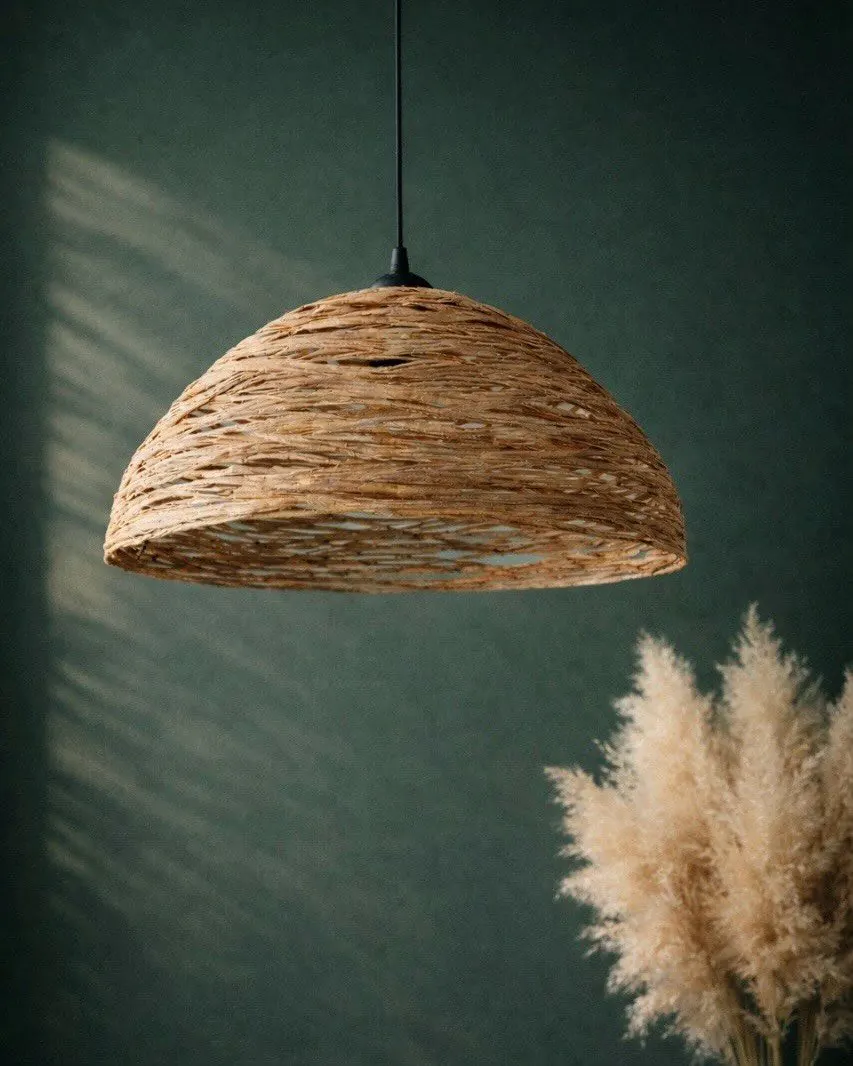
Natural-fibre shades change a room in a way solid shades cannot: light comes through the material as well as out of the opening. But raffia, jute, linen and hand-wound thread each do it differently. Here is how to choose between them, based on the shades we make in our Yerevan studio.
How the fibre changes the light
A solid shade sends light down and out of its openings. A woven or fabric shade also lets light through its body, so the shade itself glows. How it glows depends on the material and the weave: an open weave throws patterned shadows, a dense one gives an even glow, and a fabric drum open at both ends lights the ceiling as well as the floor.
Raffia: warm, golden, lantern-like
Our Raffia Pendant Light wraps natural raffia over a hand-formed frame. Light escapes through the weave as well as the opening, so at night it reads as a lantern rather than a shade: warm, golden and very quiet. It suits a dining table or a bedroom where you want atmosphere more than brightness.
Jute: texture and patterned shadows
Jute comes in two very different forms. The Braided Jute Pendant is a tall cylinder, open enough that the bulb stays visible through the weave; its height suits stairwells and tall windows where a dome would look lost, and light passes through the whole body. The Open-Weave Jute Pendant is compact, and the gaps in its weave let the light through in small points, so after dark it throws soft patterned shadows around the room.
For a table lamp, the Burlap Table Lamp sets a cylinder of woven burlap on a slim brass stem and a hand-cast cement base. The coarse weave softens the bulb into an even, warm glow, and the heavy base keeps it steady on a bedside or side table.
Linen: the most restrained
The Linen Pendant Lamp is a clean drum in undyed linen over a hand-built frame, open at the top and bottom. It throws light upward as well as down, lifting a whole room rather than spotlighting a table, which makes it the calmest choice for a living room or bedroom.
Thread and textile: colour and craft
The Thread-Wrapped Pendant is wound entirely by hand in rust-coloured thread, hundreds of passes deep, and the winding leaves a fine ribbed texture that catches light along every ridge. The Patterned Textile Pendant covers a straight-sided drum in a rust, green and cream fabric that reads graphically by day and dissolves into warm colour once lit.
Compare at a glance
Sizes and prices of the natural-fibre lamps we make. Every piece is made to order, and most can be made in another size or colour.
- Raffia Pendant Light — 17 × 35 cm — 10,000 AMD
- Braided Jute Pendant — 50 × 24 cm — 10,000 AMD
- Open-Weave Jute Pendant — 20 × 30 cm — 13,000 AMD
- Linen Pendant Lamp — 18 × 24 cm — 14,000 AMD
- Thread-Wrapped Pendant — 15 × 24 cm — 12,000 AMD
- Patterned Textile Pendant — 15 × 30 cm — 15,000 AMD
- Burlap Table Lamp with Cement Base — 15 × 38 cm — price on request
Bulbs and safety
Use LED bulbs: they run far cooler than incandescent or halogen bulbs, which matters with fabric and natural-fibre shades. Choose warm white (around 2700–3000 K), keep the bulb clear of the shade on every side and stay within the fitting's maximum wattage. With open weaves the bulb is visible, so it is worth choosing one that looks good. Our bulb and safety guide goes into more detail.
Care
Dust natural-fibre shades gently with a soft, dry cloth or brush and keep them away from damp and direct water, so bathrooms and steamy spots are best avoided. The care guide has more.
Custom sizes and colours
Every shade is made to order in Yerevan, and most can be made in another size or colour. See how custom orders work, or our guide to choosing a pendant size.
Frequently asked questions
Which natural-fibre lampshade lets out the most light?
Open shapes let out the most light. The Linen Pendant Lamp is open at the top and bottom and lights the room both upward and down, while tightly woven or wound shades give a softer, more contained glow.
Do jute lampshades cast shadows?
Open-weave jute does: the gaps in the weave let the light through in small points, so after dark it throws soft patterned shadows around the room.
What bulb should I use in a raffia or jute lamp?
An LED bulb in warm white, around 2700–3000 K, kept clear of the shade and within the fitting's maximum wattage. LEDs run far cooler than incandescent or halogen bulbs.
How do I clean a natural-fibre lampshade?
Dust it gently with a soft, dry cloth or brush and keep it away from damp and direct water.
Can you make a natural-fibre shade in a custom size?
Usually, yes. Every shade is made to order in Yerevan, and most can be made in another size or colour. Message us with the size you need.
Not sure which fibre suits your room?
Send us a photo of the space and we will suggest a shade.
Message us on Instagram