Warm or cool light? Bulb colour temperature, room by room
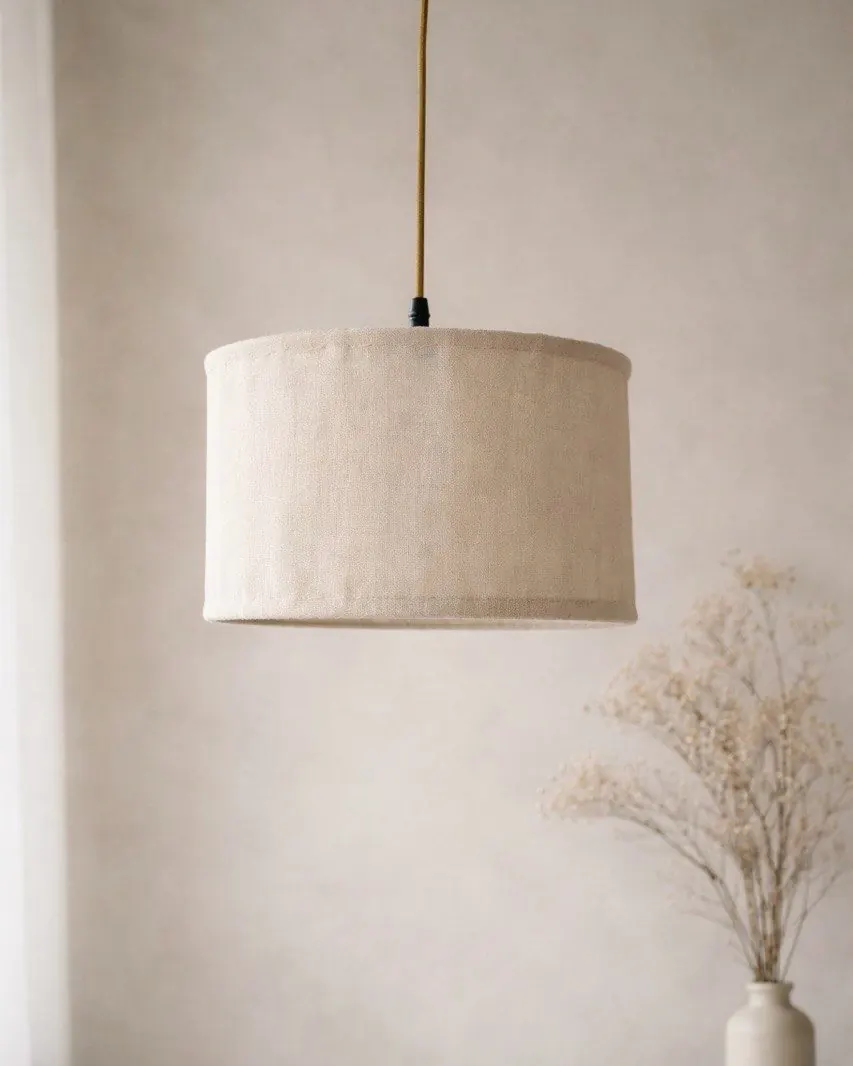
The same lamp can make a room feel like a candlelit café or a dentist's waiting room. The difference is not the lamp, it is the bulb: its colour temperature, measured in Kelvin. Here is the number to buy for each room, how bright it should be, and why the handmade paper and linen shades we make in Yerevan look best in warm light.
What colour temperature means
Every white LED bulb carries a Kelvin figure on the box. The lower the number, the warmer and more orange the light; the higher, the cooler and bluer. Roughly: 2200K is candlelight, 2700K is a classic incandescent bulb, 3000K is a slightly crisper warm white, 4000K is neutral office light, and 5000–6500K is daylight. The figure says nothing about brightness; that is lumens, covered below.
Room by room
- Living room: 2700K. The room you relax in at night. Warm white on every lamp, on dimmers where you can. Add 3000K only on a reading lamp beside a chair.
- Bedroom: 2200–2700K. The warmest light in the house. Cooler light before sleep works against you. Bedside lamps at 2200K feel like candles; a paper or linen shade softens them further.
- Dining table: 2700K. Food and faces look best in warm light. A pendant with a shade that hides the bulb avoids glare at eye level; our sizing guide covers height and diameter.
- Kitchen: 3000K for the room, 4000K for the worktop. Warm enough to feel like part of the home, cool enough to see what you are chopping. Under-cabinet strips can go to 4000K; pendants over an island stay at 2700–3000K (see the island pendant guide).
- Bathroom: 3000K at the mirror, 2700K elsewhere. Make-up and shaving need true colours; a bath does not.
- Hallway and entrance: 2700K. It is the first light guests see. Warm and low, from a pendant or wall light, not a bare ceiling bulb.
- Desk and workspace: 4000K. Neutral light keeps you alert and shows colours accurately. Keep it on the desk lamp only, so the rest of the room stays warm.
- Children's room: 2700K for play and bedtime, 4000K on the desk.
- Balcony and terrace: 2200–2700K. Anything cooler looks harsh against the night sky.
One rule for the whole home
Keep every bulb that is on at the same time within about 300K of each other. A 2700K pendant next to a 4000K floor lamp makes one look orange and the other blue, and the room never settles. If you want cool task light, switch it on alone, or keep it to a desk lamp with its own switch.
Brightness: how many lumens
Lumens, not watts, tell you how bright a bulb is. As a rule of thumb for a room about 15–20 m²: 1,500–2,500 lumens in total for a living room or bedroom, split across two or three lamps rather than one; 3,000–4,000 lumens for a kitchen; 400–800 lumens for a single pendant over a dining table; 400–600 lumens for a bedside lamp. For a shade that glows, like papier-mâché or linen, choose the lower end: the shade itself becomes the light source and a very bright bulb simply shows through as a hot spot.
CRI, the number nobody reads
CRI, the colour rendering index, tells you how true colours look under the bulb. Cheap LEDs are often CRI 80, which turns terracotta grey and makes skin look flat. Choose CRI 90 or higher for any room where you look at food, faces or colour, which is most of them. It costs a little more and changes the feel of a handmade terracotta or ochre shade completely.
Dimming and smart bulbs
A dimmer does more for atmosphere than any colour choice, but check the bulb says dimmable; many LEDs do not. Smart bulbs that change colour temperature during the day are useful in a kitchen or a bedroom: 4000K in the morning, 2700K at night, from the same fitting. Set the warmest preset as the default so guests never meet the cold one.
Bulbs for paper, linen and cement shades
Our shades are made to glow, so the bulb matters twice. Use LED only; it stays cool, which is what makes a paper or fabric shade safe. Choose warm white, 2700K or 2200K: the paper and natural fibres add their own warmth and a cool bulb fights them. A filament-style LED looks best where the bulb is visible, as in our small cement table lamps. Stay within the wattage marked on the fitting. Our bulb and safety guide covers fittings, wattage and heat in detail.
- Dome Pendant Lamp — 37 × 18 cm — 15,000 AMD
- Linen Pendant Lamp — 18 × 24 cm — 14,000 AMD
- Glowing Mushroom Lamp — 28 × 30 cm — 10,000 AMD
- Cement Table Lamp — 7.5 × 9.5 cm — 8,000 AMD
- Curved Desk Lamp — Made to order — 14,000 AMD
- Moon Table Lamp — Made to order — 11,000 AMD
A shopping list
Living room, dining, hallway, bedroom: 2700K, CRI 90+, dimmable, 400–800 lumens per lamp. Bedside: 2200K. Kitchen worktop, desk and mirror: 4000K or 3000K, CRI 90+. Check the cap size on your fitting, E27 or E14 for most lamps sold in Armenia, and buy the same brand and model for lamps that sit in the same room, so the whites match.
Frequently asked questions
Is 2700K or 3000K better for a living room?
2700K. It is the classic warm white of an incandescent bulb and the most relaxing. Use 3000K only on a reading lamp. Keep all bulbs in the room within about 300K of each other.
What colour temperature is best for a bedroom?
2200–2700K, the warmest in the house, ideally on a dimmer. Cooler light before sleep works against you. Paper or linen shades soften it further.
What Kelvin should kitchen lights be?
3000K for the general light and pendants, 4000K for worktop or under-cabinet task light. Keep island pendants at 2700–3000K so the kitchen still feels like part of the home.
Is 4000K too cool for a home?
For living spaces, yes. 4000K suits desks, worktops and bathroom mirrors, where you need to see accurately. Switch it on alone or keep it to a lamp with its own switch.
How many lumens do I need for a dining table pendant?
About 400–800 lumens for a single pendant over a table for four to six, in warm white. If the shade glows, like papier-mâché or linen, stay at the lower end to avoid a bright hot spot.
Which bulb is best for a papier-mâché or linen lampshade?
An LED in warm white, 2700K or 2200K, CRI 90 or higher, within the wattage on the fitting. LEDs stay cool, which keeps paper and fabric shades safe, and warm light suits the natural materials.
Not sure which bulb your lamp needs?
Tell us the lamp and the room, and we will tell you the Kelvin, lumens and cap size to buy locally.
Message us on Instagram