Hallway and entrance lighting: pendants, heights and warm bulbs
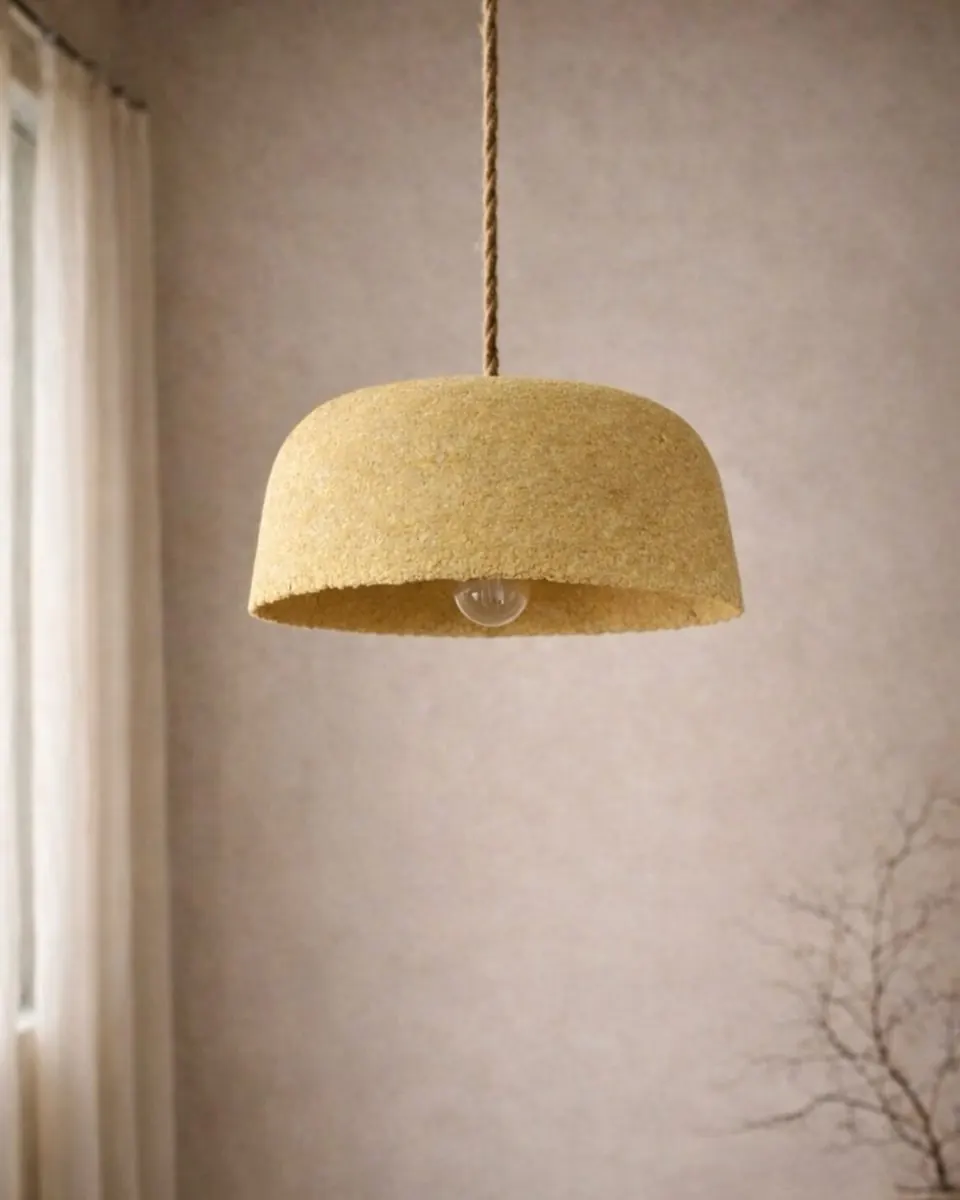
The hallway is the first light anyone sees in your home and the last you switch off at night, yet it is usually lit by a bare bulb or a flat ceiling plate. A small, warm, well-placed light changes how the whole flat feels. Here is how to light an entrance or corridor, including the narrow, low-ceilinged hallways common in Yerevan.
What the hallway light has to do
Three jobs: let you see your keys, shoes and face in the mirror; welcome you and your guests; and lead the eye into the rest of the flat. None of them needs a bright light. A warm, glowing pendant or a lamp on a console does all three better than an overhead fixture, which flattens faces and shows every scuff on the walls.
Height: the one number that matters
People walk under a hallway light, so headroom comes first. Keep the bottom of a pendant at least 2.0–2.1 m from the floor. With a 2.5 m ceiling, common in Soviet-era blocks, that leaves room only for a flat or shallow shade: a disc, a small dome or a short cylinder hung close to the ceiling. With 2.7 m or more, a taller shade or a longer drop works. Our guide to lighting a Soviet-era flat covers low ceilings in detail, and the sizing guide has the proportions.
One pendant or several
A square entrance hall wants one pendant in the centre, sized at roughly a quarter to a third of the room's width. A long corridor wants two or three small pendants in a row, about 2–2.5 m apart, rather than one bright light at one end; a row reads as a path and lights the walls evenly. If the corridor has no ceiling points where you need them, a plug-in cord and a hook solve it without new wiring, as our plug-in pendant guide explains.
A lamp on the console
If there is a console, shelf or chest of drawers by the door, a small table lamp on it is the most welcoming light you can add. It sits at the height of your hands and face, lights the mirror from the side, and can stay on low in the evening when the main light is off. A cordless, rechargeable lamp is ideal where there is no socket near the door.
Warm bulbs, and the switch
Use warm white, 2700K, so the hallway matches the rooms beyond it; a cold 4000K bulb in the hall makes the living room look orange by comparison. Our colour temperature guide has the full list. Put the main light on a switch by the front door, and if the corridor is long, on a second switch at the far end too. A dimmer or a smart bulb lets the hallway glow low at night as a guide light.
Pieces that suit a hallway
Everything below is made by hand in Yerevan, to order; small and shallow shapes suit narrow and low hallways, and most can be made in another colour or size.
- Yellow Pendant Lamp — 26 × 10 cm — 12,000 AMD
- Disc-Shaped Pendant Lamp — ⌀ 34 cm — 10,000 AMD
- Forest Green Pendant — 28 × 10 cm — 10,000 AMD
- Dome Pendant Lamp — 37 × 18 cm — 15,000 AMD
- Cement Lantern Lamp — Made to order — 9,000 AMD
- Cordless Mushroom Table Lamp — 19 × 20 cm — price on request
Papier-mache is light enough for a simple hook and glows softly, which suits a space you walk through; keep it away from a front door that lets in rain, and use an LED bulb, as our bulb guide explains.
Frequently asked questions
How high should a hallway pendant hang?
Keep the bottom of the shade at least 2.0–2.1 m from the floor so nobody walks into it. With a 2.5 m ceiling, choose a flat or shallow shade hung close to the ceiling.
How many lights does a long corridor need?
Two or three small pendants in a row, roughly 2–2.5 m apart, light the walls evenly and lead the eye, better than one bright light at one end.
What size pendant suits an entrance hall?
Roughly a quarter to a third of the hall's width: about 25–35 cm across for a typical 1.2–1.5 m wide entrance.
Which bulb colour is best for a hallway?
Warm white, 2700K, matching the rooms that open off it. A cold bulb in the hall makes the other rooms look orange by comparison.
Can I add a hallway light without an electrician?
Yes: a plug-in pendant on a ceiling hook, or a cordless rechargeable lamp on the console by the door.
Lighting a hallway?
Tell us the ceiling height and the width of the hall, and we will suggest the shape and size that fits.
Message us on Instagram