Papier-mâché bowls: how they are made, what to use them for and how to style them
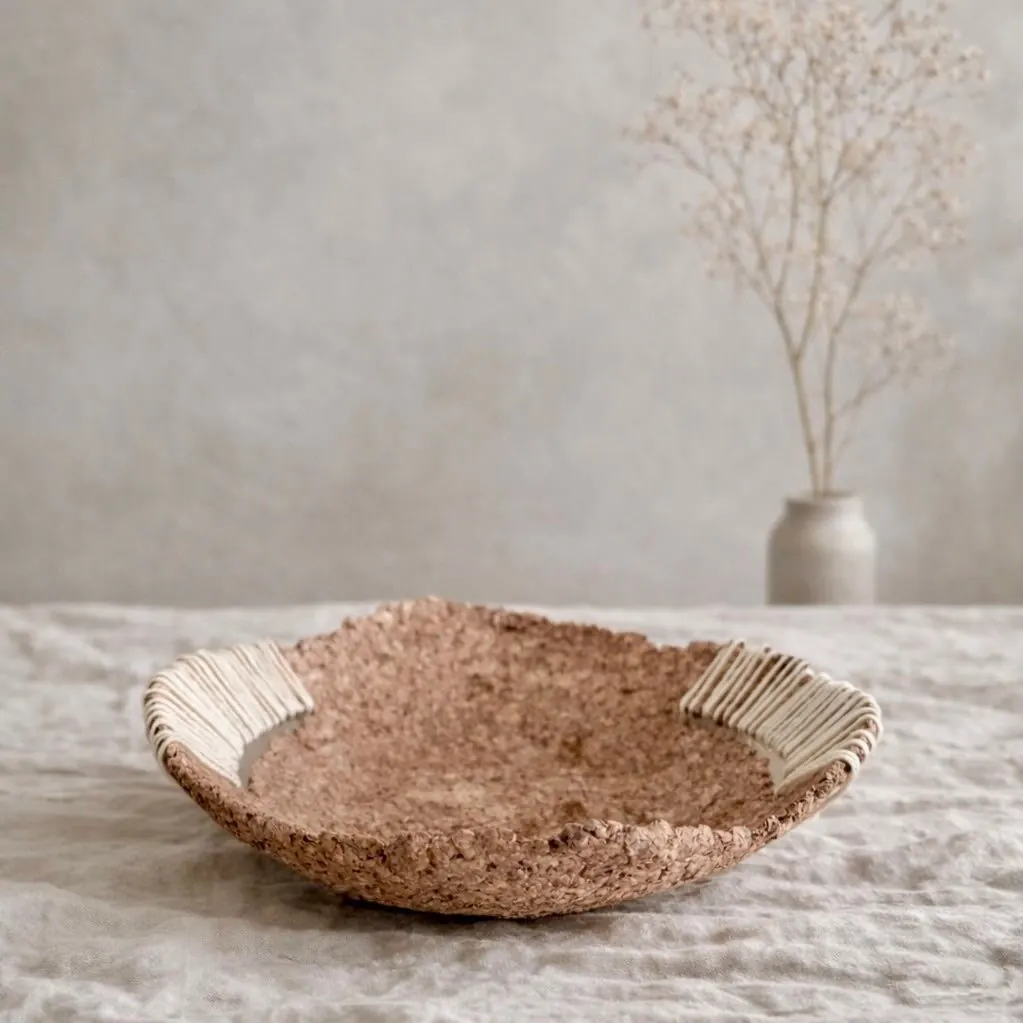
A papier-mâché bowl is a small contradiction: it looks like stone or clay and weighs almost nothing. That lightness is why people fall for them, and why they travel so well. Here is how ours are made in Yerevan, what they are actually for, how to group them on a table or shelf, and how they compare with ceramic.
How a papier-mâché bowl is made
Each bowl starts as paper and paste layered or pressed over a form, dried slowly, released and trimmed. The rim is left deliberately uneven, so it reads as made by hand rather than turned by a machine. The surface is finished in soft clay pinks, reds, greys and warm neutrals, then sealed with a matte finish that protects against dust and fingermarks. Because every bowl is shaped by hand, no two are the same, and most can be made in another colour or size to order. If you would like to try it yourself, our guide to making papier-mâché has the full method.
What they are for
Papier-mâché bowls are decorative, and that is their strength: they do not need to be useful to earn a place. That said, they are good for anything dry and light. Keys and coins by the door. Rings and earrings on a bedside table or dresser. Dried flowers, seed heads, a few smooth stones. Spools, buttons and small tools on a desk. They are not for food, fruit with a wet skin, plants, water or candles, and they should not live in a bathroom or by a steaming kettle. Keep them dry and they will last for years.
Grouping and styling
- Odd numbers. One bowl is a statement, three are a composition. Two tend to look like a pair that lost its tray.
- Vary the heights. A shallow bowl beside a deeper one, or one set on a book or a cement plinth, gives the group a skyline. A heavy cement bowl under a paper one is our favourite contrast; the papier-mâché vs cement guide explains why.
- One palette. Choose bowls within a narrow range, clay and blush and grey, or let one strong colour sit among neutrals.
- Leave one empty. An empty bowl is a shape; a full one is storage. On a coffee table, one empty bowl and one holding something small is enough.
- Give them air. A papier-mâché bowl on a bare wooden table, a stone sill or a linen runner shows its texture; on a patterned surface it disappears.
They suit the quiet, textured rooms described in our wabi-sabi and Japandi guide, where the irregular rim and chalky surface do the talking.
Papier-mâché or ceramic
Ceramic is heavier, holds water and goes in the dishwasher. Papier-mâché is light, warm to the touch, never chips when it falls and never scratches a table, but it must stay dry. If a bowl will hold fruit or be washed, choose ceramic. If it will sit on a shelf, hold keys or jewellery, be posted to a friend abroad or carried home in a suitcase, papier-mâché is the better material. Our gift-shipping guide covers how light a parcel of bowls is.
Our bowls
Each is shaped by hand in papier-mâché in Yerevan and made to order; sets can be mixed, and colours changed to match a room.
- Papier-mâché Bowls — 12 × 8 cm — 3,000–7,000 AMD
- Papier-mâché Bowl Set — Set — 3,500–5,500 AMD
- Colorful Papier Mache Bowls — 12 × 8 cm — 4,000 AMD
- Wabi-Sabi Bowls — Set — 3,000–6,000 AMD
- Textured Bowl — 20 × 9 cm — 4,000 AMD
- Warm-Tone Bowl — 14 × 6.5 cm — 4,000 AMD
Care
Dust with a soft, dry brush or cloth. Wipe a mark with a barely damp cloth and dry it at once. Keep away from standing water, steam, direct sun for long periods and radiators. Do not use household cleaners or polish. The care guide has the full list for both of our materials.
Frequently asked questions
What can I put in a papier-mâché bowl?
Anything dry and light: keys, coins, jewellery, dried flowers, smooth stones, buttons and small desk things. Not food, wet fruit, plants, water or candles.
Are papier-mâché bowls waterproof?
No. A matte sealed finish protects against dust, fingermarks and the odd splash, but the bowls must stay away from standing water, steam and bathrooms.
How do I style decorative bowls on a coffee table?
Group in odd numbers, vary the heights, keep to one palette, leave one bowl empty and give them a plain surface such as bare wood or a linen runner so the texture shows.
Papier-mâché or ceramic bowl: which is better?
Ceramic for anything that holds food or water or will be washed. Papier-mâché for shelves, keys and jewellery, gifts sent by post and anything carried home in a suitcase, because it is so light and does not chip.
Can I order papier-mâché bowls in a specific colour?
Yes. Each bowl is shaped by hand in Yerevan and made to order, so most can be made in another colour or size, and sets can be mixed. Message us with the colours of the room.
How do I clean a papier-mâché bowl?
Dust with a soft dry brush or cloth, wipe marks with a barely damp cloth and dry immediately. No household cleaners or polish.
Want a set in your colours?
Tell us how many bowls, the sizes and the colours you have in mind, and we will shape them by hand in Yerevan.
Message us on Instagram